Table Of Content

To understand all our different markets and how our products fit into the physical conditions of each city, we constantly immerse ourselves in the places where our customers live, work, and eat. Hotjar’s tools combine behavioral and attitudinal research methods through a blend of quantitative and qualitative data. Use Hotjar Surveys and Feedback widgets to collect voice-of-customer (VoC) feedback, and Heatmaps and Session Recordings to round out the picture with behavioral insights. The team at GE began by observing and gaining empathy for children at a daycare centre and talking to specialists who knew what paediatric patients went through. The team then recruited experts from a children’s museum and doctors from two hospitals. This gave them a lot of insight into what children went through when they had to sit for these procedures and what could be done to lessen the children’s stress.
What is Agile project management?
Béla H. Bánáthy, founder of the White Stag Leadership Development Program, created the “divergence-convergence” model in 1996. In the mid-2000s, the British Design Council made this famous as the Double Diamond model. Design thinking is more about exploring and defining the right problem and solution, whereas agile is about efficiently executing and delivering a product.
Join our FREE Introduction to Facilitation workshop to learn collaborative leadership skills!
To think like a designer requires dreaming up wild ideas, taking time to tinker and test, and being willing to fail early and often. The designer's mindset embraces empathy, optimism, iteration, creativity, and ambiguity. And most critically, design thinking keeps people at the center of every process. A human-centered designer knows that as long as you stay focused on the people you're designing for—and listen to them directly—you can arrive at optimal solutions that meet their needs.
Products
For deeper insights into how each of these steps flesh out in practice, you can refer to this Parent Assistance Project by AND learner Shrikant Subramaniam. They designed the initial product as a platform, with an architecture that could accommodate the development and production of the derivative products. Decades later, this decision allowed for innovations that put the user’s needs at the center—like facial recognition software, an intuitive user experience, a transformed music-listening experience, and more. Design thinking can do (and has done) wonders for tech products and their users. For Citrix, a cloud company that enables mobile work styles, the change was felt more on an internal level, by building a culture of design thinking. These tools help your design team see what your customers see, which is crucial at the testing stage, when you’re often too close to the design to understand the experience from the outside.
Design thinking's most popular strategy is BS - Fast Company
Design thinking's most popular strategy is BS.
Posted: Mon, 28 Jun 2021 07:00:00 GMT [source]
Imagine standing at the entrance of a sleek, futuristic museum, greeted by a door that refuses to budge. Frustration mounts as you struggle to figure out how to open it, but then, a child approaches, effortlessly pushes the door, and you follow suit, feeling a blend of awe and embarrassment. In think aloud testing, users test out a product or prototype and talk through the relevant tasks as they complete them. You can use this template to record the feedback, insights, and experiences of your testers, and identify the success and failure points in your proposed solution. To get the most out of a design thinking exercise, you’ll need a collaborative and creative mindset within your team. The team needs to be willing to explore new ideas, and laser-focused on customer or user needs.
Design Thinking: How it works [Theory, Practice & Examples]
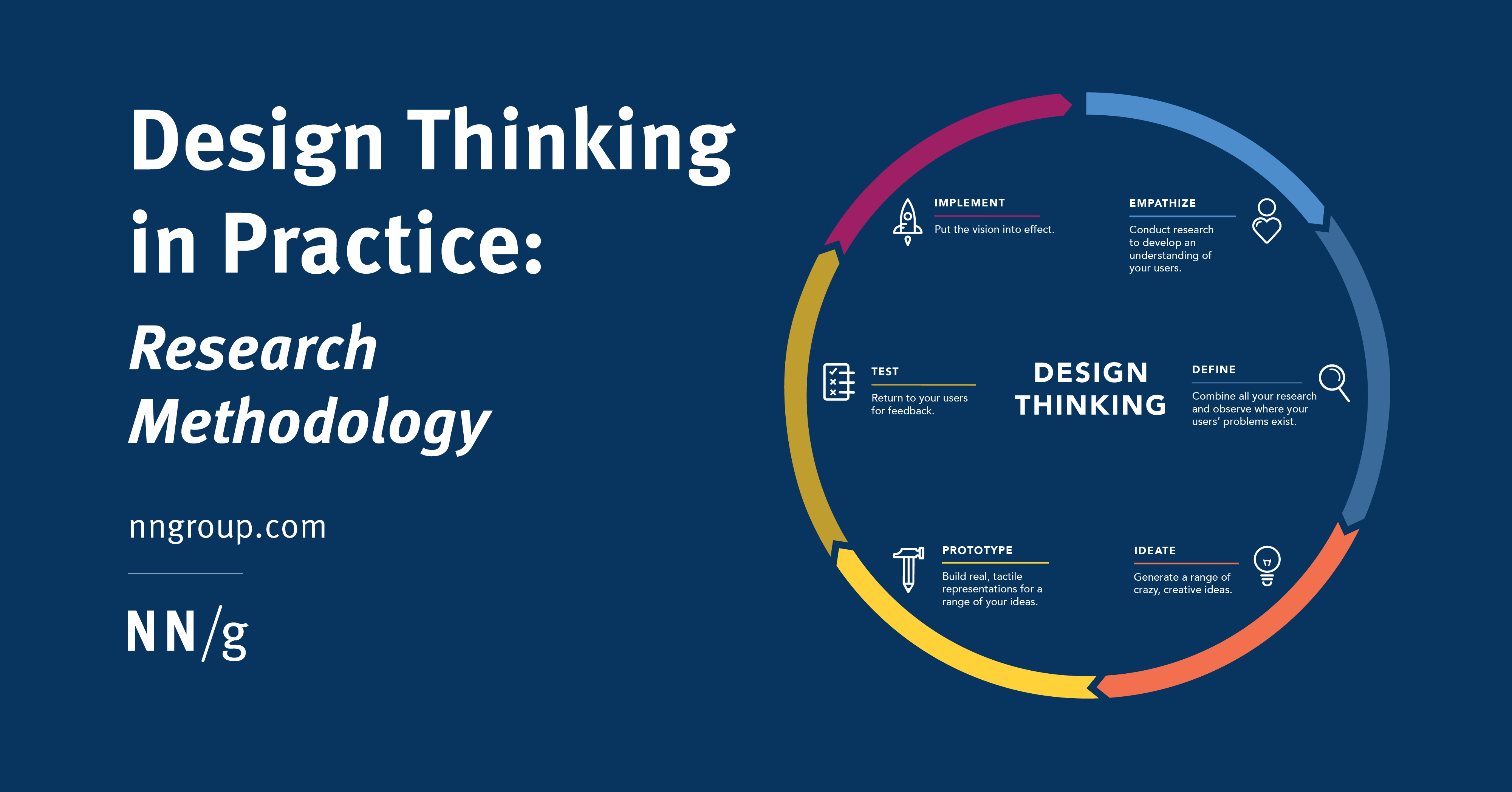
In the “Implement” phase, the team brings these ideas to life through prototypes. This stage is crucial for translating abstract concepts into tangible, viable products, services, or experiences. One thing that really stands out about the UberEats design team is their adherence to the design thinking process. Central to the design thinking process is prototyping and testing (more on that later) which allows designers to try, to fail, and to learn what works. Testing also involves customers, and that continued involvement provides essential user feedback on potential designs and use cases. If the MIT-Altitude team studying walkers had ended user involvement after its initial interviews, it would likely have ended up with a walker that didn’t work very well for customers.
Stage 5: Test—Try the Solutions Out
There’s much more, including full online courses we've developed on many topics related to design thinking and its applications. Design thinking has even found its way into the world of medicine and is seen by many as fundamental to the future of wellness. This case study describes how design thinking was used in a two-day course by the Hasso Plattner Institute of Design at Stanford to explore ways to improve the patient experience in the emergency room. The team tore up its product development playbook and developed a new approach called IBM Design Thinking to replace it. Singapore-based philanthropic foundation Grey for Good used design thinking to come up with a solution to this problem.
Creative Tech Careers: An Expert’s Advice
You want to understand their challenges and what they need from your product or company to address them. Designers or evaluators rigorously test the complete product using the best solutions identified in the Prototype stage. This is the final stage of the five-stage model; however, in an iterative process such as design thinking, the results generated are often used to redefine one or more further problems. You can then proceed with further iterations and make alterations and refinements to rule out alternative solutions. The ultimate goal is to get as deep an understanding of the product and its users as possible.
Design thinking mindsets are how individuals think, feel and express themselves during design thinking activities. It includes people’s expectations and orientations during a design project. The updated version also highlights the importance of leadership (to create an environment that allows innovation) and engagement (to connect with different stakeholders and involve them in the design process). In the book Designing Social Systems in a Changing World, Béla Heinrich Bánáthy, Professor at San Jose State University and UC Berkeley, created a “divergence-convergence model” diagram.
To gain insights that go beyond what’s explicitly stated—to uncover the unspoken, the latent, and the emotions that influence user behavior. Empathy is the bedrock upon which the entire design thinking process rests, for it’s from this wellspring of understanding that innovative solutions emerge. If you want to learn more about understanding different personalities, take our DISC-Test. The first stage of the design thinking process focuses on user-centric research. You want to gain an empathic understanding of the problem you are trying to solve.
These stages are different modes that contribute to the entire design project rather than sequential steps. The goal is to gain a deep understanding of the users and their ideal solution/product. Oral-B, a renowned brand in oral hygiene products, has consistently leveraged design thinking principles across its product development and innovation endeavours.
Imagine you are designing a new walker for rehabilitation patients and the elderly, but you have never used one. Certainly not, if you haven’t extensively observed and spoken with real customers. There is a reason that design thinking is often referred to as human-centered design. The d.school also represents this 5-stage process through their hexagonal design thinking visualization. This ensures the stages are seen more as enablers or modes of thinking, rather than concrete linear steps.

The team took on the perspective of the clients and was able to see problems that they otherwise would have been blind to from the other side of the process. The parents have to drag their children to a daunting series of meetings and examinations in unfamiliar new places, which distressed the children leading many parents to entirely abandon the process. It wasn’t just a bigger smartphone or a smaller tablet computer; this “phablet” met the needs of knowledge workers wanting to jot down ideas on the go. In the end, the company was able to increase its appeal by connecting with the right audience, leading to record revenue growth of up to $3 billion.




No comments:
Post a Comment